Our Services
© 2026 | Jackson Restoration
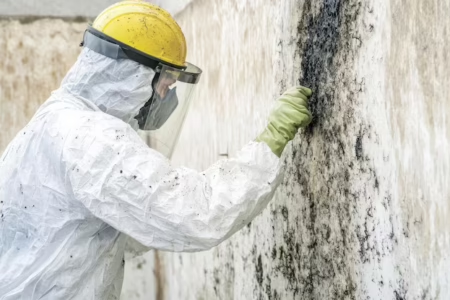
The period immediately following a water damage event is the most critical window for preventing mold colonization. Mold spores — present on every surface in every building as a matter of normal indoor biology — require only two things to transition from dormant to active: a food source and moisture. After a water intrusion event, both conditions are met throughout every affected area of the structure. The race between the mold and the drying process begins the moment water enters your home, and it does not stop until the structure is verified dry and treated.
Jackson Restoration integrates professional antimicrobial treatment into every water damage restoration project in Long Beach, California as a standard component of the dry-out process — not an optional add-on. When the drying process is complete and moisture readings confirm the structure has reached its target, EPA-registered antimicrobial agents are applied to all affected structural surfaces to reduce the residual spore load and inhibit colonization during the final stages of drying and the early phase of reconstruction.
Call us at (949) 669-7346 if you’ve recently experienced water damage in Long Beach and are concerned that the drying response was incomplete or that antimicrobial treatment was not performed. We respond within 60-minutes or less.
Consumer-grade “mold prevention” products — sprays, foggers, and home remedies — do not provide meaningful protection against mold colonization in structural materials following a water damage event. These products are formulated for surface application on hard, non-porous materials and do not penetrate into the paper facing of drywall, the grain of wood framing, or the fiber matrix of insulation — precisely the materials where mold colonization occurs after water intrusion.
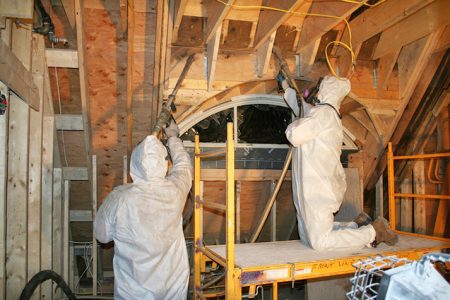
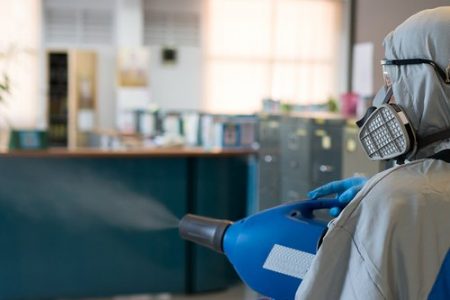
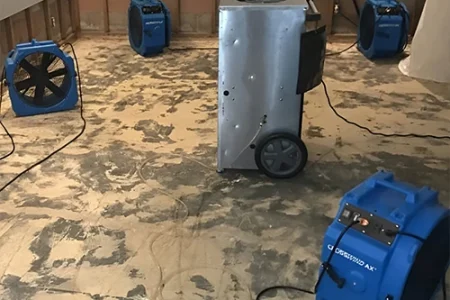
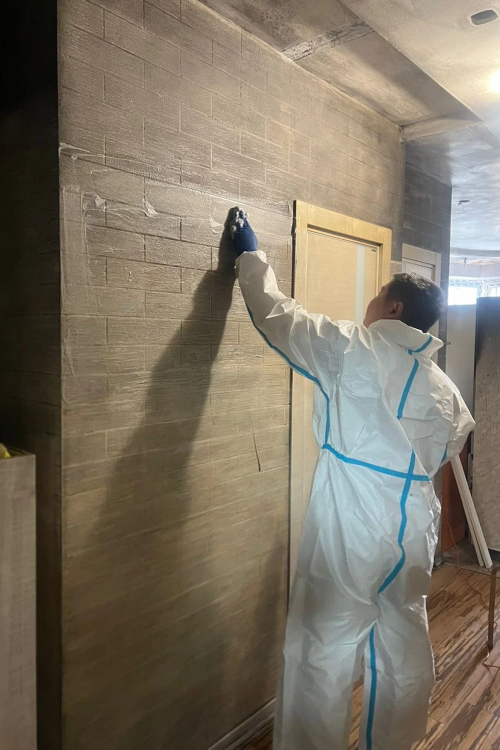
Professional antimicrobial treatment uses EPA-registered agents formulated specifically for structural application, applied through commercial fogging or spray equipment at concentrations and coverage rates that achieve penetrating surface protection. Timing also matters — antimicrobial treatment is most effective when applied to thoroughly dried structural materials. Applying treatment to still-saturated materials produces an ineffective result. Jackson Restoration’s protocol sequences treatment correctly: dry to verified targets first, treat second.
Mold germination from dormant spores begins within 24 to 48 hours of sustained moisture exposure on organic surfaces at typical indoor temperatures. Within 3 to 5 days, germinated spores produce visible surface growth. Within 1 to 2 weeks, established colonies produce secondary spore release that redistributes contamination to previously unaffected surfaces throughout the structure.
This timeline is why Jackson Restoration arrives within 60-minutes or less — because the 24-to-48-hour window between water intrusion and mold germination is not a planning window, it is an action window. Extraction, drying system deployment, and antimicrobial treatment are all components of a time-sensitive response sequence, and every hour of delay compresses the available window before colonization begins.
The most common presentation of an inadequate post-water damage response is mold discovered 3 to 6 months after the original event — often when renovation work opens a wall cavity, when a persistent musty odor prompts an inspection, or when visible surface mold appears on painted drywall that was assumed to be dry. The original response stopped the visible water but did not complete the process.
Homeowners in Long Beach who experienced water damage that was addressed with household fans and a consumer dehumidifier — or by a restoration company that did not use LGR equipment and did not perform antimicrobial treatment — are at elevated risk for this delayed mold discovery. If this describes a recent water event in your home, call (949) 669-7346.
Treatment should be applied as soon as the structure is verified dry — ideally within 48 to 72 hours of the water intrusion event when combined with immediate professional drying. Treatment applied to verified-dry materials within the first 48 to 72 hours provides maximum prevention benefit by addressing the pre-germination window.
No. Antimicrobial treatment is a prevention protocol for surfaces that have not yet developed active mold growth. If mold colonization is already established, remediation is required. Prevention products are not effective against established colonies.
Antimicrobial treatment is a standard, accepted line item in professional water damage restoration claims. Jackson Restoration documents treatment according to carrier requirements and works with State Farm, Allstate, Liberty Mutual, and Nationwide to include treatment costs in your claim recovery.
We serve Long Beach, California and surrounding communities including Signal Hill, Lakewood, and Seal Beach. Call (949) 669-7346 for immediate response or a post-event assessment.
The window between water damage and mold growth is measured in hours, not days. Jackson Restoration responds within 60-minutes or less, dries your structure to verified targets, and applies professional antimicrobial treatment as a standard component of every water damage restoration project. We work with State Farm, Allstate, Liberty Mutual, and Nationwide and provide the documentation your claim requires.
Call Jackson Restoration at (949) 669-7346 now. Available 24/7. Verified drying. Professional treatment. Complete restoration.