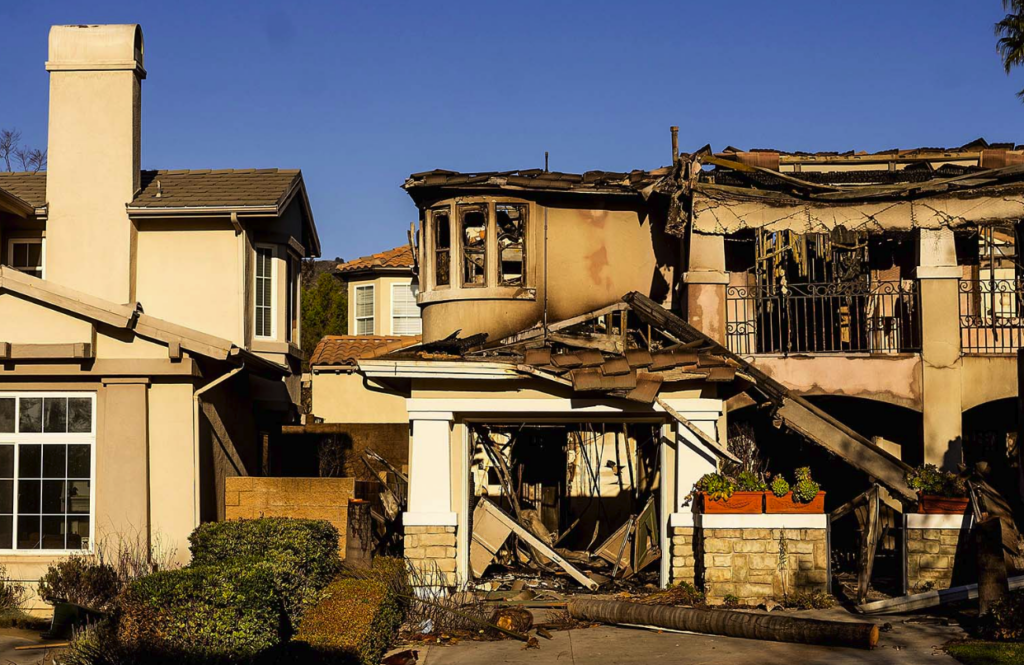
Wildfire smoke can cause significant damage inside homes that were never directly threatened by fire – fine particulate matter, toxic ash residue, and volatile organic compounds penetrate HVAC systems, porous building materials, and soft furnishings during a smoke event and require professional cleaning rather than standard household methods to fully remove.
For homeowners throughout Long Beach, Los Angeles, and Orange County, this is an increasingly relevant reality. Every major wildfire in the region – and Southern California averages several significant fire events per year – sends smoke and particulate matter across the entire metro area, often for days at a time. Homes dozens of miles from the fire line can sustain measurable interior smoke contamination that has real health and property implications.
Why Wildfire Smoke Is Different From Other Smoke
Wildfire smoke is not like the brief smoke from a kitchen incident. A structure fire or household fire burns known materials. Wildfire smoke is a complex mixture that includes:
- Fine particulate matter (PM2.5) – particles small enough to penetrate deep into lungs and pass through standard air filters; these are the primary health concern during wildfire events
- Polycyclic aromatic hydrocarbons (PAHs) – toxic compounds produced during incomplete combustion of wood, vegetation, and structures
- Heavy metals and ash – when wildfires burn structures (as increasingly happens in the LA urban-wildland interface), ash containing lead, arsenic, and other contaminants from building materials becomes part of the smoke and fallout
- Volatile organic compounds (VOCs) – gases released during combustion that can linger in porous materials and continue off-gassing after the fire event ends
This chemistry is why wildfire smoke contamination in homes requires professional assessment and remediation – the standard wipe-down and air-out approach doesn’t address what’s been absorbed into porous surfaces and circulating through HVAC systems.
How Smoke Enters a Home During a Wildfire
Even a tightly constructed home is not airtight. During a smoke event, contamination enters through several pathways:
HVAC Systems
If your HVAC system is running during a smoke event – even with the windows closed – it’s actively pulling outdoor air through the system. Standard HVAC filters are not rated for PM2.5 and allow fine particles to pass into the return air stream and settle throughout the ductwork and interior. This is why post-fire air duct assessment is one of the most important steps after a significant smoke event near your home.
Natural Air Exchange
All homes exchange air with the outside through gaps around windows, doors, electrical outlets, plumbing penetrations, and attic vents. During a multi-day smoke event with high outdoor particulate concentrations, meaningful contamination accumulates inside even without any windows or doors opened.
Brief Openings
Any door opened during a heavy smoke period – even for 30 seconds – lets a measurable pulse of contaminated outdoor air inside. If your family was evacuating, checking on property, or simply going in and out during the event, the interior exposure was significant.
Attic Penetration
Attic spaces, which are typically ventilated and less airtight than living areas, accumulate heavy smoke contamination during fire events. From the attic, particulates can settle into insulation and migrate into living spaces through ceiling penetrations, can lights, and attic access points.
What Gets Damaged by Wildfire Smoke Inside a Home
HVAC Ductwork and Air Handling Equipment
The duct system becomes a reservoir for particulates that continue recirculating through the home every time the system runs. HVAC equipment exposed to heavy smoke – coils, filters, blower components – requires professional cleaning, not just filter replacement.
Soft Furnishings and Textiles
Upholstered furniture, mattresses, curtains, carpets, and clothing absorb volatile compounds and fine particles. The characteristic smoky odor that lingers in a home after a fire event is largely these materials off-gassing absorbed compounds. Standard washing addresses surface contamination; professional treatment is needed for deeply embedded smoke odor.
Porous Building Materials
Drywall, wood framing, insulation, and acoustic ceiling materials absorb smoke gases and particulates. Unlike hard surfaces, these materials can’t simply be wiped clean – they hold contamination at depth and continue releasing it over time.
Hard Surfaces
Countertops, cabinets, glass, and metal surfaces accumulate visible and invisible smoke film that leaves a residue if not properly cleaned. While these surfaces are less absorbent than textiles and drywall, the residue contains the same toxic compounds as the rest of the contamination and should be cleaned with appropriate agents – not just household cleaners.
Attic Insulation
Blown-in and batt insulation in attic spaces absorbs smoke heavily during fire events and is rarely addressed during standard post-fire cleaning. Contaminated attic insulation continues to off-gas into living spaces below indefinitely.
The Health Case for Professional Remediation
The compounds in wildfire smoke – particularly PAHs and fine particulates – are classified as carcinogens and respiratory irritants with long-term health implications. The California Air Resources Board and the EPA have both documented that interior wildfire smoke contamination poses health risks that persist well after outdoor air quality improves.
For households with asthma, COPD, cardiovascular conditions, or young children, the threshold for professional intervention is lower. But the contamination itself doesn’t disappear on its own – it remains in porous materials and ductwork until professionally addressed.
What Professional Smoke Remediation Involves
A professional smoke and soot cleanup after a wildfire event typically includes:
- Air quality assessment – measuring indoor particulate levels and identifying the scope of contamination before work begins
- HVAC cleaning and filter replacement – professional duct cleaning to remove smoke deposits from the system that would otherwise continue recirculating
- Hard surface cleaning – applying appropriate smoke-neutralizing cleaning agents to all hard surfaces throughout the home
- Ozone treatment or hydroxyl generation – neutralizing volatile compounds that have been absorbed into soft furnishings and porous materials; these are professional-grade processes that are not replicable with consumer air purifiers
- Textile treatment – professional cleaning of soft furnishings that cannot be household-laundered
- Attic assessment – evaluating insulation contamination and, where significant, recommending replacement
- Post-remediation air testing – confirming that indoor air quality has returned to acceptable levels before the work is considered complete
Does Insurance Cover Wildfire Smoke Damage?
Standard California homeowners insurance policies typically cover fire and smoke damage, including damage from wildfire – even when the home wasn’t directly burned. Interior smoke contamination that requires professional remediation is a covered loss under most policies.
However, California’s insurance market has been significantly disrupted since 2023, with State Farm, Allstate, and other major carriers having withdrawn from or restricted new policy writing in California. Many LA-area homeowners have been moved to California FAIR Plan policies, which provide more limited coverage. If you’re on the FAIR Plan, review your specific coverage terms before assuming smoke damage is fully covered.
Jackson Restoration works directly with all California insurance carriers – including FAIR Plan – and handles the documentation and adjuster process for smoke damage insurance claims from initial assessment through final settlement.
After a Wildfire Event Near Long Beach or LA: What to Do
If a significant wildfire has burned near your home and you’re concerned about smoke infiltration:
- Don’t run your HVAC system until the ductwork has been assessed – running it circulates whatever is already inside
- Change all HVAC filters immediately and upgrade to MERV-13 or higher-rated filters going forward
- Keep windows closed until outdoor AQI is confirmed green (Good) for at least 24 hours
- Contact a restoration professional for an assessment – particularly if you notice lingering odor, visible residue on surfaces, or family members experiencing unusual respiratory symptoms
Jackson Restoration provides post-wildfire smoke damage assessment and remediation throughout Long Beach, Los Angeles County, and Orange County – including Huntington Beach, Seal Beach, Laguna Beach, Newport Beach, Irvine, and surrounding coastal and inland communities that fall within SoCal’s fire-affected zones.
Contact us today or learn more about our fire and smoke damage restoration services.