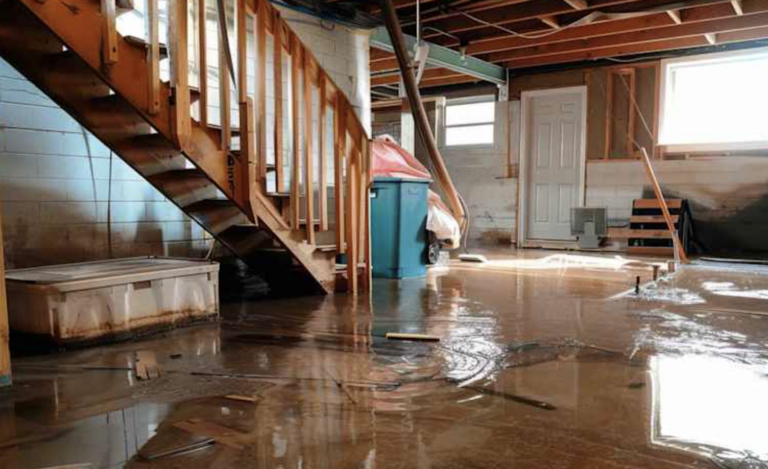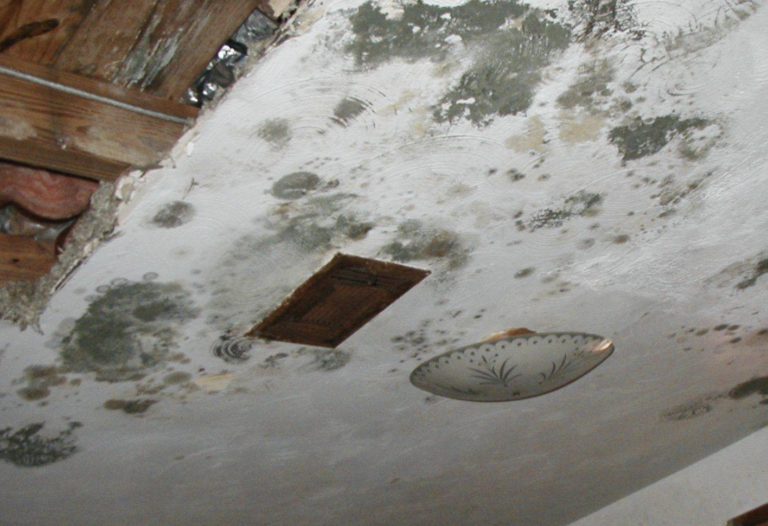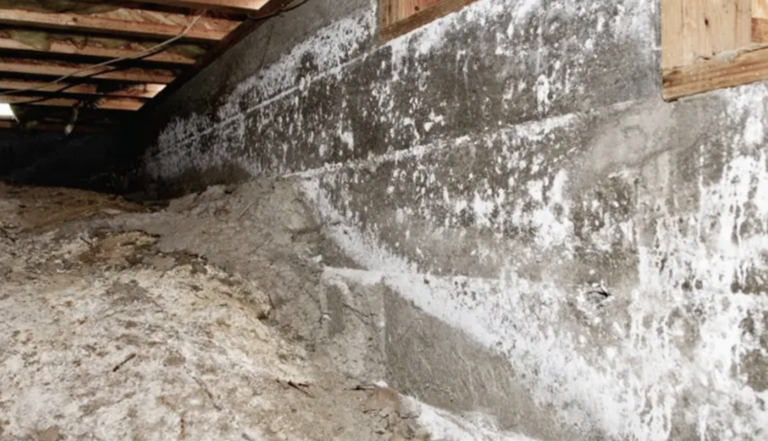
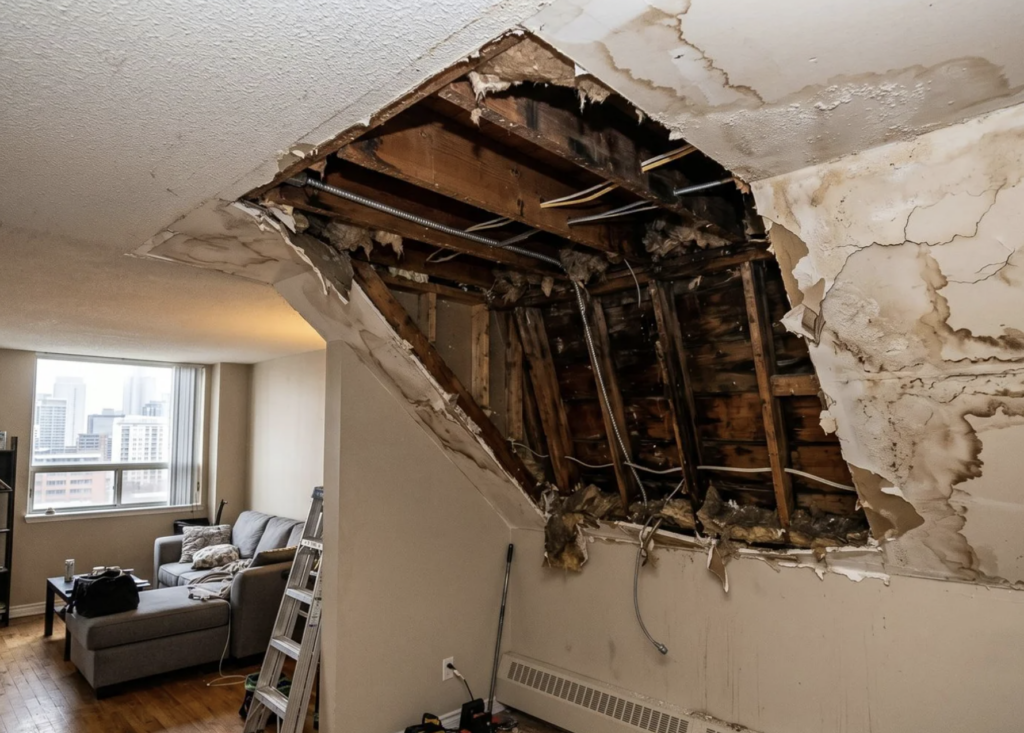
When water damage occurs in a California condo, responsibility is divided between the unit owner’s individual policy and the HOA’s master policy—and the split depends on where the water originated, what it damaged, and how your CC&Rs define the boundary between “unit” and “common area.” There is no universal answer, and California condo owners frequently discover after a water event that their coverage expectations don’t match the language in their governing documents. Understanding the framework before water enters the picture is the best protection; understanding it immediately after is the next best thing.
The Basic Framework: Two Policies, One Event
California condominium ownership involves two distinct insurance structures that must work together when water damage occurs:
The HOA master policy covers the building structure—typically the roof, exterior walls, common area hallways, shared plumbing in the walls, and in many developments the original fixtures and finishes within individual units (sometimes called “bare walls in” or “original spec” coverage). The master policy is paid for through HOA dues.
The individual unit owner’s HO-6 policy covers the owner’s personal property, improvements and betterments made to the unit above original builder spec, and in some cases the interior of the unit depending on how the master policy is structured. California law requires HO-6 coverage to be disclosed at time of sale, but it is not mandatory to purchase.
The critical document governing which policy covers what is your CC&Rs (Covenants, Conditions & Restrictions)—specifically the section defining the boundary between the unit and the common area. Some California HOA CC&Rs use a “bare walls” definition (the HOA insures everything from the unfinished drywall outward; you insure everything from the unfinished drywall inward). Others use an “all-in” structure where the master policy covers original fixtures and finishes. The difference materially affects who pays for what after water damage.
The Most Common Scenarios in Long Beach and LA County Condos
Water from your unit damages only your unit. If a pipe or fixture in your unit fails and the water stays in your unit, this is generally your HO-6 claim. Your unit’s policy covers the interior damage. If you don’t have an HO-6 policy, you bear the cost out of pocket.
Water from your unit migrates to a neighbor’s unit below or beside you. This is the most contentious scenario. Your HO-6 liability coverage may cover your neighbor’s damages, but only if your negligence caused the event. If a pipe failed without any negligence on your part (a sudden and unexpected failure), your neighbor’s HO-6 policy typically covers their own unit, and both owners may look to the HOA master policy if shared plumbing was involved. If the leak was caused by something you failed to maintain (a known dripping faucet, a washing machine connection you didn’t check), your liability exposure is greater.
Water originates from a common area (shared plumbing, roof, or another common element). If water damage results from a failure in common area infrastructure, the HOA master policy is the primary coverage. This includes roof leaks, failures in shared supply lines inside the walls, and water that enters through common area windows or doors. HOA insurance claims can be slow and contentious, particularly if the HOA’s master policy has a high deductible that the HOA assesses back to unit owners.
Water comes from an upstairs neighbor’s unit. Your neighbor’s HO-6 liability coverage may respond if they were negligent. If the source was sudden and unforeseeable, you typically file under your own HO-6 policy for your unit’s interior damage, then your insurer subrogates against the neighbor’s policy. Many Long Beach condo owners are surprised to learn they cannot simply demand their upstairs neighbor’s insurance pay for their damage without establishing negligence.
What California Law Says
California Civil Code Section 4775 establishes that HOAs are responsible for maintaining, repairing, and replacing common area elements, including common area plumbing. When a common area system failure causes damage to a unit, the HOA (through its master policy) is generally responsible for the cost of repairing damage to the common area itself, while unit owners bear responsibility for their unit interiors—subject to the CC&Rs.
California Civil Code Section 1365.9 requires HOA master policies to include earthquake loss assessment coverage and limits the HOA’s ability to assess unit owners for losses that should be covered by the master policy. However, this doesn’t eliminate all assessment risk—if the master policy deductible is $25,000 and the loss is $30,000, the HOA may pass the deductible back to owners through a special assessment.
Steps to Take Immediately After Water Damage in Your Condo
The actions you take in the first hours after discovering water damage affect both the extent of the damage and your coverage options:
- Stop the source if possible. If the water is coming from your unit, shut off the supply line to the fixture or the main shutoff to your unit.
- Document everything before any cleanup begins. Photos and video of all affected surfaces, contents, and the water source are essential for every insurance claim in the chain.
- Notify the HOA property manager immediately. Even if you believe the source is within your unit, the HOA needs to be notified because common area plumbing or other units may be involved. Get notification in writing (email or text).
- Contact a restoration professional the same day. Mold can begin growing on wet building materials within 24 hours. A professional restoration company can extract water, begin drying, and document scope—documentation that matters for every insurance claim involved.
- Open a claim with your own HO-6 insurer. Even if you believe another party is responsible, opening your own claim protects your position. Your insurer can subrogate against other parties once responsibility is established.
Why Getting Professional Documentation Matters
In multi-party condo water damage situations, the scope-of-loss documentation produced by a restoration company often determines how the insurance claims resolve. A detailed moisture mapping report, drying logs, and scope of work from an IICRC-certified firm gives every insurer involved an objective third-party record of the extent of damage—information that tends to resolve disputes faster and more favorably than owner-produced photos alone.
Frequently Asked Questions
My upstairs neighbor’s toilet overflowed and damaged my unit. Do I have to pay my own deductible?
If your upstairs neighbor was negligent—for example, they left the toilet running and went on vacation—their HO-6 liability coverage may cover your damages without requiring you to use your own policy. If the toilet failure was sudden and truly unexpected, you may need to file under your own HO-6 and let your insurer pursue subrogation. Your insurance agent can advise on which path to take based on the specific facts. Either way, opening your claim preserves your options while the responsible party investigation happens.
The HOA says the leak came from common area plumbing. Will their master policy cover my damaged flooring and cabinets?
It depends on your CC&Rs. Under a “bare walls” master policy, the HOA covers only the structure; your unit’s interior finishes are your HO-6 claim. Under an “all-in” policy, original builder-spec finishes within the unit may be covered by the master policy, with your HO-6 covering upgrades above builder spec. Read your CC&Rs carefully and ask your HOA property manager for a copy of the master policy declarations page.
Can I choose my own restoration contractor after condo water damage?
Yes. In California, you have the right to hire your own licensed restoration contractor regardless of what your HOA or insurance company recommends. Hiring your own contractor—particularly one with IICRC certification and experience navigating California condo water damage—ensures the scope is documented accurately and the work is done to your standard, not the lowest-bid contractor on an insurer’s preferred list.
How long does a condo water damage insurance claim typically take to resolve in California?
Simple single-party claims (only your unit, only your HO-6) can resolve within 2–4 weeks. Multi-party situations—where HOA, multiple unit owners, and multiple insurers are involved—can take months. Keeping meticulous records of all communications, having professional scope documentation from your restoration contractor, and following up in writing with all parties accelerates the process.
Condo Water Damage in Long Beach? Call Jackson Restoration
Jackson Restoration has extensive experience with Long Beach and LA County condo water damage—documenting multi-party scope accurately, coordinating with HOA property managers and multiple adjusters, and restoring units to pre-loss condition. We provide the IICRC-certified documentation that insurance claims require. Reach us 24/7 through our water damage restoration page for same-day response.