After a house fire in California, the most critical actions in the first 24 hours are obtaining fire department clearance before re-entering, securing the structure with professional board-up and emergency tarping, and calling a licensed fire damage restoration company to begin documenting smoke and soot damage — because whether you have a standard homeowners policy or a California FAIR Plan policy, the documentation your restoration company produces in the first 24 to 48 hours is what determines how much of your loss is covered and how quickly your claim is paid.
For homeowners in Long Beach, Lakewood, Carson, Torrance, Downey, and across LA County, the past several years have underscored that fire risk in Southern California is not limited to hillside communities with direct wildland exposure. The 2025 Palisades and Eaton fires burned through neighborhoods that hadn’t experienced significant fire in generations — and the smoke, ash, and toxic particulate those events deposited across LA County affected homes well outside the fire perimeters. Understanding what to do after a house fire, and doing it in the right sequence, is the difference between a managed recovery and a years-long insurance dispute.
Step 1: Do Not Re-Enter Until the Structure Is Officially Cleared
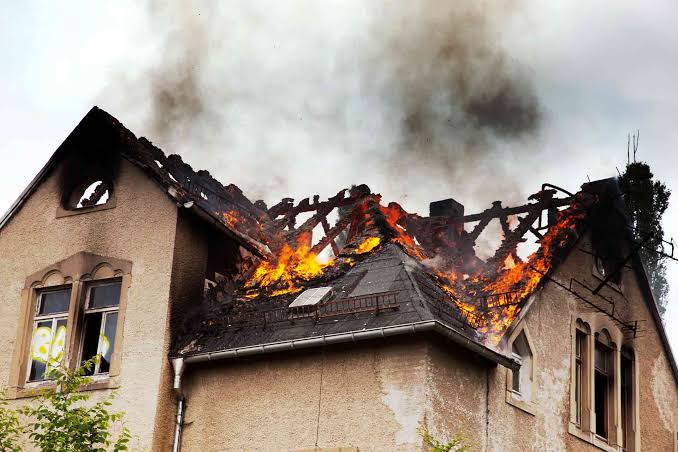
After a structural fire, the fire department secures the scene. Before leaving, ask directly: Is the structure cleared for re-entry? If the answer is no — or if you’re given a red or yellow placard — do not enter the structure for any reason. Post-fire structures carry hazards that aren’t obvious from the outside:
- Structural instability: Fire compromises load-bearing elements — roof trusses, floor joists, and wall framing — in ways that aren’t visible from the outside. A roof or floor that looks intact may fail under the weight of a person.
- Electrical hazards: Heat-damaged wiring can re-energize after cooling, and melted insulation creates short-circuit risks even when the main breaker is off. The utility company may need to disconnect service at the meter before the structure is safe to enter.
- Toxic air quality: Combustion of synthetic materials — insulation, carpet, upholstery, cabinetry, electronics — releases hydrogen cyanide, benzene, formaldehyde, and carbon monoxide at concentrations that remain dangerous inside a closed structure for hours. California’s older housing stock, common in Long Beach and other established LA County communities, often contains materials that produce particularly toxic combustion byproducts.
- Hidden smoldering: Fire can continue smoldering inside wall cavities, attic insulation, and between floor assemblies for hours after visible flames are extinguished, with risk of re-ignition.
Once clearance is confirmed, limit time inside and wear an N95 or P100 respirator. Do not run the home’s HVAC system — if smoke entered the ductwork during the fire, running the system circulates toxic particulate throughout the structure and into areas that were not directly affected.
Step 2: Secure the Structure With Board-Up and Emergency Tarping
A fire-damaged home is an open structure. Windows are broken. Doors may not close or lock. Roof sections may be missing or compromised. Securing the structure against further weather intrusion and unauthorized entry is the first active step — and in California, it matters for your insurance claim.
California homeowners insurance policies — both standard HO-3 policies and California FAIR Plan policies — require the policyholder to take reasonable steps to prevent further damage after a covered loss. A fire-damaged roof left open to rain accumulates secondary water damage that the insurer can argue was avoidable. A properly installed emergency tarp — extended past the ridge and secured with battens, not just draped over the damage — stops the weather damage clock and demonstrates that mitigation was taken seriously from the first day.
Board-up of windows, doors, and any structural openings also prevents theft. Fire-damaged properties in LA County are frequently targeted within 24 to 48 hours of an event. Appliances, copper wiring, and personal property that survived the fire are at significant risk in an unsecured structure.
Jackson Restoration provides emergency board-up and tarping across Long Beach and LA County. We can have a crew on-site within hours of your call.
Step 3: Document Everything Before Any Cleanup Begins
Documentation is the single most consequential action you can take in the first hours after a house fire. The photographs and video you capture before anything is touched, cleaned, or moved are the primary evidence base for your insurance claim — and in California’s complex insurance environment, especially for homeowners with FAIR Plan policies, thorough early documentation is what prevents low initial settlement offers from closing out legitimate losses.
Document before touching anything:
- Every room affected by fire, smoke, or water from firefighting — from multiple angles, including ceilings and floors
- All structural damage: roof, walls, windows, doors, eaves, exterior siding
- The area of origin if visible, and any firefighting access points
- Every item of personal property that was damaged or destroyed — clothing, furniture, electronics, appliances, documents, artwork
- The exterior from all four sides, including the condition of the roof from ground level
Video walkthrough with narration captures scope and context that still images miss. Take more than you think you need — you cannot go back and re-document original conditions once cleanup begins.
Step 4: Why Smoke and Soot Damage Keeps Getting Worse After the Fire Is Out
The fire being extinguished does not stop fire damage. Smoke and soot continue to cause ongoing, accelerating damage through a process of chemical reaction that most homeowners don’t anticipate:
- Acidic soot residue: Combustion produces acidic compounds that are deposited as fine soot particles across every surface in and adjacent to the fire area. These acids begin etching metal fixtures, appliances, plumbing hardware, and chrome within hours. Surfaces that could have been cleaned professionally within 24 to 48 hours become permanently pitted and stained after a week.
- Protein film from kitchen and organic fires: Fires involving food, cooking oils, or organic materials deposit an invisible protein film on surfaces that produces a severe, persistent odor and requires specialized enzymatic treatment to neutralize. Standard cleaning products make this worse.
- Soot penetration into porous materials: Fine soot particles migrate into carpet, upholstery, clothing, drywall, and wood framing over time. The longer remediation is delayed, the deeper the penetration — and the higher the probability that materials must be replaced rather than cleaned.
- HVAC system contamination: Smoke that entered ductwork during the fire is distributed throughout the structure every time the HVAC runs. Duct cleaning after a fire is not optional — it is required to prevent re-contaminating cleaned spaces.
In Southern California’s warm climate — and particularly in coastal Long Beach, where summer temperatures combined with marine layer humidity create conditions that accelerate chemical reactions in soot residue — the window for effective surface restoration without replacement closes faster than in cooler climates. This is why restoration companies that respond within 24 hours produce significantly better material recovery rates than those called in after several days.
Step 5: Call a Fire Damage Restoration Company — Not Just a General Contractor
A general contractor rebuilds after fire damage is mitigated. A fire damage restoration company addresses the fire damage itself — the soot, the smoke odor, the water from firefighting, the content cleaning, and the insurance documentation — before reconstruction begins.
The scope of professional fire damage restoration includes:
- Emergency board-up and tarping to secure the structure
- Smoke and soot cleaning using dry chemical sponges, wet cleaning agents, HEPA vacuuming, and material-specific methods — the wrong cleaning agent on certain soot types makes the staining permanent
- Odor remediation through thermal fogging and hydroxyl treatment that penetrate wall cavities and HVAC systems where surface cleaning doesn’t reach
- Content pack-out — your belongings are inventoried, photographed, packed, and transported to a controlled facility for professional cleaning, ozone treatment, and secure storage during reconstruction
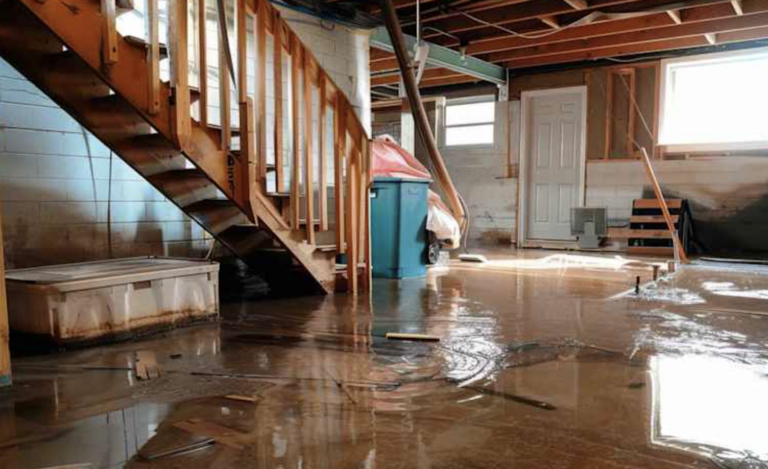
- Water damage mitigation from firefighting water — significant water volume is used on structural fires, and that water soaks wall assemblies and flooring requiring the same extraction and drying process as any water damage event
- Scope of loss documentation — the comprehensive report that details every affected material, its condition, and the restoration or replacement cost, submitted to your insurance adjuster
California FAIR Plan and Standard Homeowners Insurance: What Fire Damage Covers
Fire damage is one of the most reliably covered perils in California homeowners insurance — both under standard HO-3 policies and under the California FAIR Plan, which became the policy of last resort for hundreds of thousands of LA County homeowners after major carriers began withdrawing from California markets in 2022 through 2025.
Standard California Homeowners Policy (HO-3)
Fire damage to the structure and its contents is a named peril covered under the dwelling (Coverage A) and personal property (Coverage C) sections. Water damage from firefighting is covered as part of the same fire event. Additional Living Expenses (Coverage D) cover hotel costs, meals, and other reasonable expenses while the home is uninhabitable — keep all receipts from the day of the fire forward.
California FAIR Plan
The FAIR Plan covers fire, lightning, internal explosion, and smoke damage to the structure. However, the FAIR Plan is a named-perils policy that does not include the broader coverage of a standard HO-3 — theft, liability, and other perils require a separate “Difference in Conditions” (DIC) policy that wraps around the FAIR Plan. Many homeowners who obtained FAIR Plan coverage during the 2022–2025 carrier withdrawal period did so without a DIC policy, leaving gaps in their coverage that are only discovered at claim time.
If you are on the FAIR Plan and experience a fire, the documentation produced by your restoration company — the scope of loss report, photo documentation, contents inventory, and drying logs from any water damage mitigation — is especially critical, because the FAIR Plan has historically required more detailed substantiation of claims than standard carriers.
What Can Reduce Your Payout
- Failing to notify your insurer promptly after the fire
- Leaving the structure unsecured (secondary damage may be excluded)
- Beginning cleanup or reconstruction before the adjuster documents original conditions
- Disposing of damaged personal property before it is inventoried for the contents claim
- Delays in beginning emergency mitigation — ongoing soot damage after the fire may be characterized as avoidable if no restoration company was called
Smoke and Ash Damage Beyond the Fire Perimeter: A SoCal Reality
The 2025 Palisades and Eaton fires demonstrated something LA County homeowners now understand: you don’t need to be in a fire zone for your home to sustain significant damage. Homes in Long Beach, Lakewood, Compton, Carson, and across the South Bay received measurable ash deposition and elevated particulate levels during and after those fires. Smoke infiltration into HVAC systems — drawing exterior air through return vents during the fire events — contaminated ductwork, insulation, and living spaces in homes that were miles from the fire perimeters.
Ash deposited on roofs, exterior surfaces, and in HVAC systems contains heavy metals, asbestos (from burned structures), and other toxic compounds. Homeowners who experienced significant ash deposition during a major fire event — even without direct structural fire damage — may have a legitimate smoke and ash damage claim under their homeowners policy. Documentation and professional assessment are the starting point for these claims.
What NOT to Do After a House Fire in California
- Don’t use water or electricity inside the structure until utilities are cleared by the relevant authority
- Don’t attempt to clean soot yourself — using water on dry soot smears and sets it; using the wrong cleaning agent on certain soot types makes staining permanent
- Don’t throw away any damaged items before they are inventoried and photographed for the contents claim — even items that appear destroyed have dollar value for your claim
- Don’t accept an initial settlement before the full scope of restoration is established — fire damage frequently reveals additional damage during the mitigation and demolition phases, and supplemental claims are normal and appropriate
- Don’t begin permanent repairs before the adjuster documents damage — emergency mitigation (board-up, tarping, extraction) is required and allowed; major reconstruction should wait
Jackson Restoration: Fire Damage Response Across Long Beach and LA County
Jackson Restoration provides comprehensive fire damage restoration services across Long Beach, Lakewood, Torrance, Carson, Downey, Compton, Signal Hill, Wilmington, and the broader LA County area. Our certified fire damage restoration team handles emergency board-up and tarping, smoke and soot cleaning, content pack-out and cleaning, water damage mitigation from firefighting, odor remediation, and complete reconstruction — coordinating directly with your insurer or FAIR Plan adjuster throughout the process.
Available 24/7 for emergency response. Call us immediately after a fire — we’ll dispatch an emergency crew and begin coordinating your claim from the first call. Learn more about our fire and smoke damage restoration services and our water damage mitigation process for firefighting water intrusion.