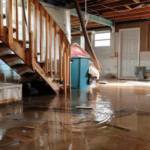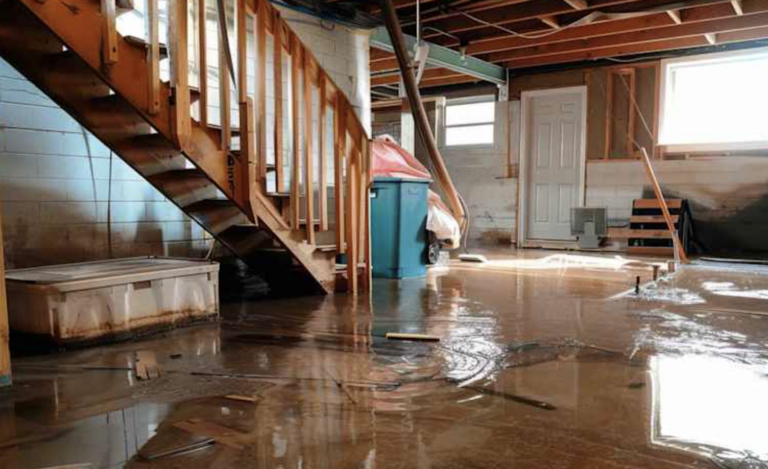
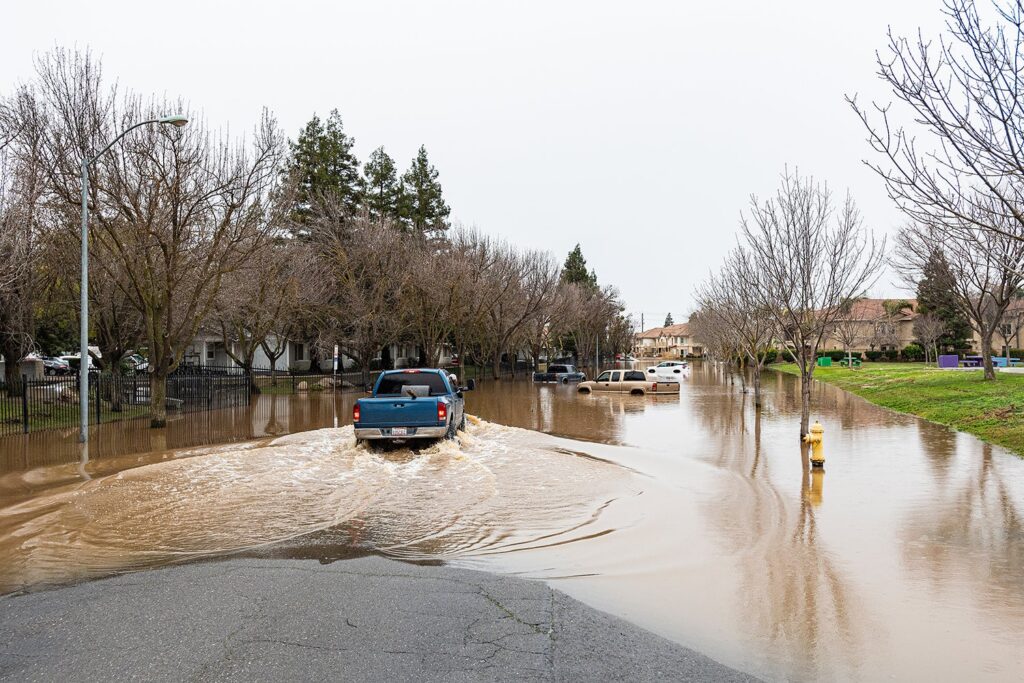
Atmospheric river storms in Southern California cause a type of water damage that standard homeowners insurance often doesn’t fully cover and that most LA County homeowners aren’t prepared for — not the overflow flooding that FEMA flood maps predict, but sustained heavy rainfall that saturates clay soils, overwhelms drainage systems, and forces water through foundation cracks, garage slabs, and window wells of homes that have never flooded before, often in neighborhoods with no history of flood events and no flood insurance.
For homeowners in Long Beach, Lakewood, Carson, Compton, Torrance, Downey, and across LA County, atmospheric river events have gone from an occasional weather curiosity to a recurring annual reality. The 2022–23 atmospheric river sequence caused an estimated $3.5 billion in damage across California. The 2023–24 and 2024–25 seasons brought additional destructive events to LA County. Understanding how atmospheric river water damage differs from other water damage events — where it enters the home, what it affects, and how to navigate the insurance response — is the knowledge gap that’s costing Southern California homeowners tens of thousands of dollars per event.
What an Atmospheric River Actually Is — and Why It Damages Homes Differently
An atmospheric river is a narrow corridor of concentrated moisture in the atmosphere — typically 250 to 375 miles wide and carrying water vapor equivalent to the average flow of the Mississippi River — that makes landfall along the California coast and releases its moisture as sustained rainfall over hours to days. Unlike a typical Southern California rain event, which delivers a quick burst of rainfall and moves through, an atmospheric river delivers rainfall continuously over 24 to 72 hours or longer.
This matters for how water enters homes because the damage mechanism is different from flash flooding:
- Soil saturation: LA County’s clay-heavy soils — prevalent throughout Long Beach, Lakewood, Carson, and the South Bay — have very low permeability when dry and become essentially impermeable when saturated. After 12 to 18 hours of sustained rainfall, these soils can no longer absorb additional water. All subsequent rainfall runs across the surface seeking low points — which are often garage aprons, window wells, and the grade around foundations.
- Foundation hydrostatic pressure: As saturated soil surrounds a foundation, the water table rises and exerts hydrostatic pressure against foundation walls and slabs. Hairline cracks that have been present for years without issue become active water intrusion points. Slab foundations — the most common foundation type in Long Beach and surrounding communities — can develop seepage through construction joints and cold joints that were previously dry.
- Overwhelmed drainage infrastructure: LA County’s storm drain system was designed to handle a specific design storm threshold. Multi-day atmospheric river events can deliver rainfall that exceeds this threshold, causing storm drains to back up, curb gutters to overflow, and water to pond in low spots that normally drain quickly. Homes with grade that slopes toward the structure rather than away from it are particularly vulnerable.
- Roof drainage overload: Sustained heavy rainfall can exceed the drainage capacity of gutters and downspouts, causing water to overflow gutter edges and run down exterior walls rather than through downspouts. This creates wall assembly infiltration that is distinct from a roof leak — water enters behind siding and penetrates wall sheathing rather than coming through the roof surface.
Where Atmospheric River Water Enters LA County Homes
The entry points for atmospheric river water damage are different from typical plumbing or appliance water damage — which is one reason homeowners are often surprised by where the damage appears:
Garage Slab and Apron
Garages are among the most common entry points for atmospheric river water in Long Beach and the surrounding communities. The garage apron — the concrete transition between the driveway and the garage floor — is often at or near grade level. During sustained rainfall that overwhelms surface drainage, water sheets across the driveway and flows directly under the garage door. Once inside the garage, it seeps through construction joints in the slab and into the garage slab itself, migrating into adjacent rooms through shared walls.
Foundation Perimeter and Slab Joints
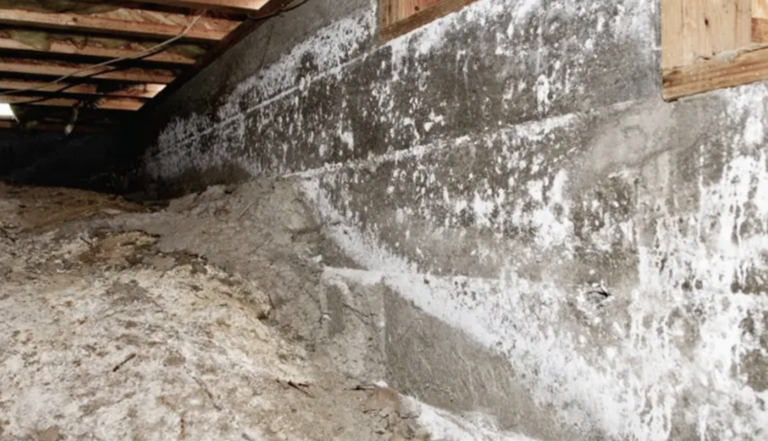
As hydrostatic pressure builds around a saturated foundation, water seeks the path of least resistance. On slab foundations, this is typically the cold joint where the slab meets the stem wall, or construction joints in the slab itself. On raised foundations (more common in older Long Beach bungalow stock), water enters the crawl space through foundation vents and accumulates under the flooring. Homeowners frequently notice this as wet carpets or damp hardwood floors without any visible ceiling or wall staining above — because the water is coming from below.
Window Wells and Below-Grade Windows
Windows that are at or below grade level — common in older LA County homes with partial basements or sunken living room configurations — are direct entry points when surface water accumulates faster than window well drains can handle. Window frame seals that are functional under normal conditions can fail under sustained hydrostatic pressure from a filled window well.
Roof-to-Wall Transitions and Flashing
Flashing at roof-to-wall transitions, chimney bases, and parapet walls is designed to handle typical rainfall rates. During sustained high-volume rainfall, small flashing deficiencies that have been latent for years become active leak points as water overwhelms the flashing’s drainage capacity. These leaks often appear as ceiling staining in the top floor of the home near exterior walls rather than in the center of the ceiling.
HVAC Condensate Systems
In Southern California homes where the HVAC condenser or air handler is located in the attic, sustained rainfall that drives high outdoor humidity can overwhelm condensate drain systems during storm events when the AC is not running. Condensate drain pans that rely on gravity drainage can back up if the drain line is slow — a condition that may only manifest during extended high-humidity periods.
The Insurance Gap: Why Atmospheric River Damage Is Often Underinsured
This is the issue that matters most for LA County homeowners, and it’s one where getting informed before an event is significantly better than discovering the gap during a claim.
Standard Homeowners Insurance (HO-3) Does Not Cover Flood
A standard California HO-3 policy covers sudden and accidental water damage originating from inside the home — plumbing failures, appliance malfunctions, roof leaks from storm damage. It explicitly excludes flood damage, defined as water that enters the home from outside the structure through ground-level intrusion. Atmospheric river water entering through a saturated foundation, a garage slab, or a window well is typically classified as flood damage and excluded from coverage.
The National Flood Insurance Program (NFIP)
Flood insurance through FEMA’s National Flood Insurance Program covers exactly the type of water intrusion that atmospheric rivers cause — but enrollment is not automatic, and most LA County homeowners outside designated Special Flood Hazard Areas have not purchased it. An NFIP policy typically costs $700 to $2,500 per year for a residential property and provides up to $250,000 in building coverage and $100,000 in contents coverage for flood events.
Critically: there is a 30-day waiting period before a newly purchased NFIP policy takes effect. A flood policy cannot be purchased reactively when an atmospheric river is forecast. This is the single most important insurance planning action for LA County homeowners who don’t currently have flood coverage.
The Gray Area: What Your HO-3 May Still Cover
Not every atmospheric river water damage claim is automatically excluded. The coverage question often turns on how the water entered the home:
- Water that enters through a storm-damaged roof opening is covered as a wind/rain event, not as flood
- Water that enters through a failed pipe or plumbing connection that was stressed by the storm is covered as a plumbing failure
- Water that enters through a window that was broken by wind-driven rain may be covered as a wind event
- Water that seeps through a foundation or flows in from grade level is typically excluded as flood
The documentation of how and where water entered the home is what determines which coverage applies. A professional restoration company that assesses and documents entry points during the mitigation process provides the evidence base for the coverage argument — which is why calling a restoration company immediately, before any drying or cleanup begins, is critical for your claim.
What to Do Immediately After Atmospheric River Water Enters Your Home
- Confirm electrical safety first. If water has entered living spaces and is near electrical outlets, appliances, or your electrical panel, do not enter until the power is confirmed off or the panel is above the water line. Turn off breakers for affected areas from a dry location if the panel is accessible safely.
- Stop additional water entry where possible. If water is entering through a door threshold, place towels or sandbags as temporary barriers. If gutter overflow is running down a wall, clearing gutters when it is safe to do so reduces ongoing intrusion. These are temporary measures, not solutions.
- Do not use wet-dry vacuums or household fans as your primary response. Atmospheric river intrusion through foundations and slabs involves soil-contaminated water and often reaches Category 2 (gray water) or Category 3 (black water) classification depending on what it contacted before entering. Household equipment moves surface water but does nothing for moisture inside wall assemblies, under flooring, and in the structural framing where mold develops.
- Document everything before any cleanup begins. Photograph every water entry point, every affected room, every waterline on walls, and all damaged contents before anything is moved or dried. Video walkthrough with narration captures the scale that still images miss. This documentation is your claim evidence.
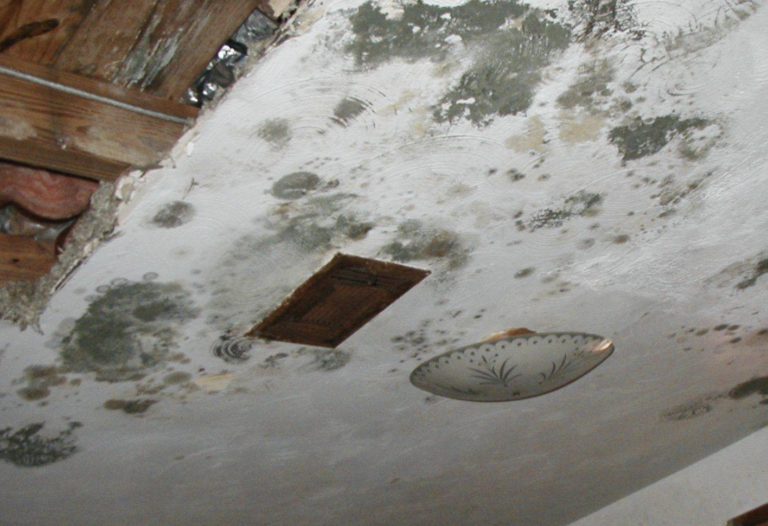
- Call a restoration company immediately. In Southern California’s warm climate, the 24 to 48 hour window between water intrusion and mold growth onset is the key response window. Professional extraction, moisture assessment of wall assemblies and flooring, and structural drying equipment must be in place before that window closes.
- Call your insurance company to open a claim. Even if you’re unsure whether the damage is covered, open the claim promptly. The insurance company’s determination of coverage requires an adjuster to see the conditions — conditions that change as mitigation proceeds. A claim opened promptly gives you the ability to contest a denial if the coverage determination is incorrect.
Atmospheric River Damage in Long Beach and Coastal LA County: Local Factors
Long Beach and the coastal communities of LA County have specific vulnerabilities that make atmospheric river events particularly damaging:
Low-lying coastal topography
Much of Long Beach sits at or near sea level, with limited elevation for storm drainage to flow away from. Drainage systems that function well under normal conditions can back up quickly when regional storm drain capacity is overwhelmed, causing localized ponding in low spots throughout the city.
Older housing stock
Significant portions of Long Beach, Compton, and Carson consist of housing built in the 1940s through 1960s with foundation types and drainage designs that predate modern stormwater management standards. Foundation permeability issues that were manageable in moderate rainfall become significant events during multi-day atmospheric river conditions.
Proximity to concrete storm channels
The LA River and its tributaries, including the Dominguez Channel and other concrete-lined flood control channels that run through Long Beach and Carson, are designed to carry stormwater but can back up during surges that exceed channel capacity, temporarily raising the water table in adjacent neighborhoods.
Expansive clay soils
The expansive clay soils common throughout LA County absorb moisture and swell, which can exert pressure on foundation walls and cause previously stable hairline cracks to open under hydrostatic load during sustained rain events.
After the Storm: What the Restoration Process Looks Like
Atmospheric river water damage restoration follows the same IICRC-standard process as other water damage events, with category classification driven by the water’s contamination level:
- Assessment and moisture mapping: Calibrated moisture meters and thermal imaging identify all affected materials — including inside wall assemblies and under flooring where surface inspection alone misses contamination.
- Extraction: Industrial extraction equipment removes standing water from affected areas. For slab seepage, this includes water on top of the slab and moisture wicked into flooring.
- Material removal (if Category 2 or 3): If the water source involved ground contact, soil contact, or long dwell time, porous materials may require removal rather than drying in place.
- Structural drying: Industrial air movers and dehumidifiers placed throughout affected areas, monitored daily with moisture meter readings documented in a drying log for the insurance file.
- Reconstruction: New flooring, drywall, insulation, and finishes after confirmed dry readings throughout all affected assemblies.
Jackson Restoration: Atmospheric River and Storm Water Damage Across Long Beach and LA County
Jackson Restoration provides 24/7 emergency water damage response across Long Beach, Lakewood, Torrance, Carson, Seal Beach, Downey, Signal Hill, Wilmington, and LA County. When an atmospheric river event brings water into your home, we respond with industrial extraction equipment, professional moisture assessment, and structural drying that addresses the full scope of water intrusion — including the moisture inside wall assemblies and under flooring that household methods don’t reach.
Call us immediately when storm water enters your home — available 24 hours a day, 7 days a week. Learn more about our water damage restoration services. For insurance questions before an event, see our guide: Does Renters Insurance Cover Water Damage and Mold in California?