A refrigerator water line leak is one of the most damaging household leaks because it almost always goes undetected. Unlike a burst pipe or water heater failure, a refrigerator supply line typically drips slowly — a few drops per hour — hidden behind the appliance or underneath it, quietly saturating the kitchen subfloor for days or weeks before any visible sign appears. By the time you notice warped flooring or a musty smell, the damage beneath the surface is often far more extensive than what’s visible.
Here’s what Long Beach and LA County homeowners need to know about refrigerator water line leaks: what causes them, how to find them, and what to do about the damage they leave behind.
What Is the Refrigerator Water Line?
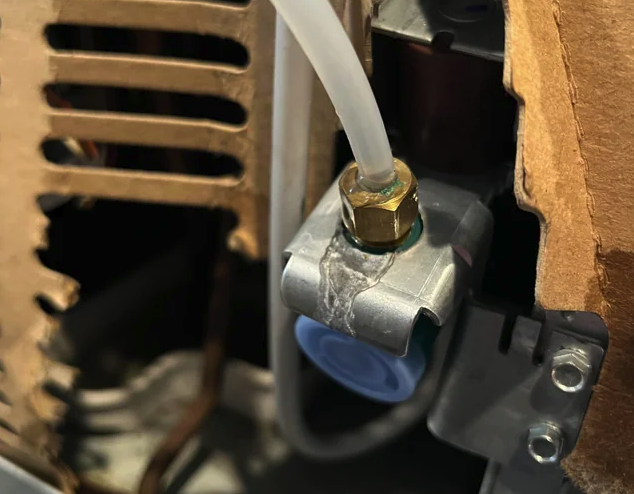
The refrigerator water line is the small-diameter supply tube that connects your home’s plumbing to the refrigerator’s ice maker and water dispenser. It typically runs from a saddle valve (a small valve that clamps onto a nearby cold water supply pipe) behind the refrigerator, along the floor, and into the back of the appliance.
There are three common types of refrigerator water line material:
- Copper tubing — Durable but prone to kinking and pinhole corrosion, especially in older homes. Once a copper line kinks, the weak point is permanent.
- Braided stainless steel — The most reliable option. The braided exterior protects the inner rubber hose, and quality braided lines can last 10+ years without issue.
- Plastic (polyethylene) tubing — Common in builder-grade installations and the most failure-prone. Plastic lines crack, become brittle with age, and are easily damaged when the refrigerator is moved. Many water damage restoration calls we respond to in LA County involve failed plastic refrigerator water lines.
Why Refrigerator Water Line Leaks Are So Dangerous
The volume of water involved in a refrigerator supply line leak is typically small — the line is narrow and the pressure is moderate. But the duration is the problem. A refrigerator sits against a kitchen wall, gets moved rarely, and the area behind it is almost never inspected. A slow drip from a saddle valve or a pinhole in the supply line can run continuously for days or weeks before anyone notices.
In Southern California homes, where kitchen floors in Long Beach and surrounding communities are frequently hardwood, engineered wood, or vinyl plank over wood subfloor, this sustained low-level moisture does significant damage. The water seeps under the flooring and pools in the subfloor, which can’t dry because the refrigerator and adjacent cabinets block air circulation entirely. The result is wood rot in the subfloor, adhesive failure beneath the floor covering, and the ideal conditions for mold to establish itself in a space that never fully dries out.
Warning Signs of a Refrigerator Water Line Leak
Because the leak is hidden, you’re looking for secondary signs rather than obvious pooling. Pull the refrigerator away from the wall if you notice any of the following:
- Floor buckling or curling near the refrigerator — Particularly along the seams of hardwood or vinyl plank flooring near where the appliance sits. This is often the first visible symptom of weeks of subfloor moisture.
- A musty or earthy smell coming from the kitchen — Especially noticeable in the morning when air circulation has been minimal overnight. This usually indicates mold has established itself in the subfloor or wall cavity.
- Soft spots underfoot — A floor section near the refrigerator that feels soft, spongy, or gives slightly underfoot indicates subfloor saturation and possible wood rot.
- The ice maker or water dispenser stopped working — A sudden loss of ice maker function with no other explanation can indicate the water supply line has crimped, disconnected, or failed at a fitting.
- Visible staining on adjacent base cabinet interiors — Open the cabinets flanking the refrigerator and inspect the floor and lower panels. Discoloration along the interior base can indicate water wicking from the subfloor up through the cabinet material.
- Small puddle or dampness visible when you pull the refrigerator out — Even a small amount of standing water means the area has been wet long enough that the immediate surface isn’t absorbing any more.
What to Do When You Find a Refrigerator Water Line Leak
1. Pull the Refrigerator Away from the Wall
This is the only way to access and inspect the full area. Pull the appliance straight out (protect the floor with cardboard or moving sliders) and visually inspect the supply line, the saddle valve connection, and the fitting where the line connects to the back of the refrigerator.
2. Shut Off the Water Supply to the Line
The saddle valve behind the refrigerator controls the water supply to the unit. Turn it clockwise to close it. If the valve is corroded or won’t close properly (common with older saddle valves), shut off the water to the house at the main.
3. Disconnect the Ice Maker
If the line is visibly damaged, disconnect it from both the saddle valve and the refrigerator fitting. Plastic tubing can often be pulled free by hand; copper fittings will need a wrench.
4. Assess the Visible Damage
Check the floor behind and beneath where the refrigerator was sitting. Press down on the floor covering — feel for softness or give. Look at the baseboard and the bottom 6 inches of drywall for discoloration or softness. Note any staining on the subfloor surface if the floor covering has been lifted.
5. Call a Water Damage Restoration Company
Even if the visible damage appears limited, a professional moisture assessment is essential. Moisture meters and thermal imaging cameras reveal saturation in the subfloor, adjacent wall cavities, and under the toe-kick of surrounding cabinets that isn’t visible to the eye. A slow refrigerator leak that ran for two weeks may have affected a much larger area than the 24 square inches visible behind the appliance. Jackson Restoration’s water damage response team serves Long Beach and greater LA County and can typically assess and begin drying the same day.
What a Refrigerator Water Line Leak Damages
Hardwood and engineered wood flooring are the most commonly damaged materials. As detailed in our guide on water damage restoration, wood flooring absorbs moisture rapidly when it sits against a wet subfloor — cupping, buckling, and delamination can result from sustained exposure even at low moisture levels. If the leak ran for more than a week, flooring replacement rather than restoration is often the outcome in the immediate area around the appliance.
The subfloor (typically plywood or OSB in Long Beach homes built after the 1970s, or diagonal board sheathing in older construction) can develop wood rot, adhesive failure, and structural weakness after prolonged moisture exposure. In severe cases, sections of subfloor require replacement before any new flooring can be installed.
Adjacent cabinets have a particle board or MDF core in most builder-grade kitchen installations. This material swells irreversibly when wet and doesn’t recover. The interior floor of a base cabinet adjacent to the refrigerator may require replacement if the water reached it.
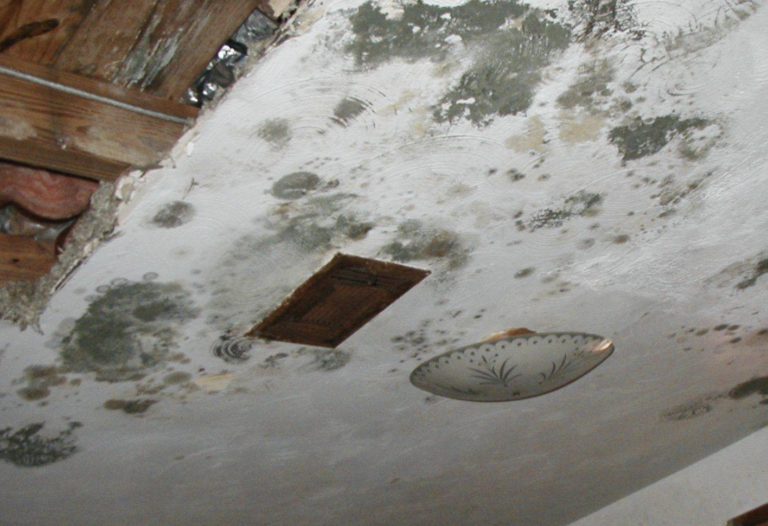
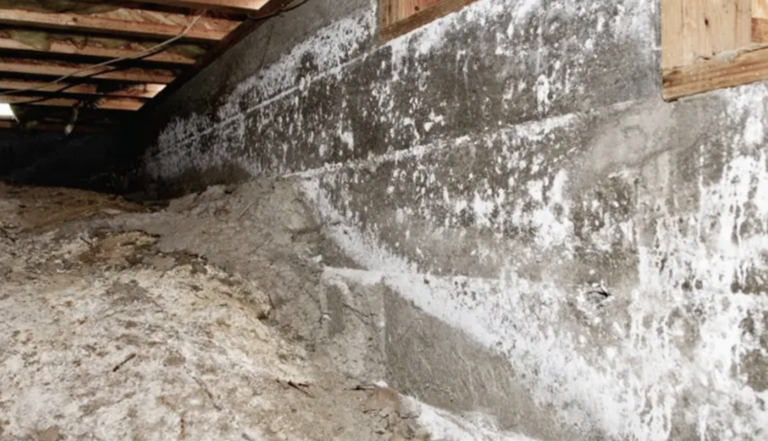
Mold is the most serious secondary consequence. The enclosed, dark space behind and beneath a refrigerator that has had a slow leak for any significant period is an ideal mold environment. If mold is confirmed, professional mold remediation is required in addition to the structural drying.
Will Homeowner’s Insurance Cover a Refrigerator Water Line Leak?
In most cases, yes — with an important caveat. Sudden and accidental water damage is covered under standard California homeowner’s policies. A refrigerator line that fails abruptly is generally covered. However, a slow leak that ran for weeks is sometimes categorized as “gradual damage” and excluded, depending on your policy language and whether the insurer can demonstrate the leak was discoverable with reasonable inspection.
This is where professional documentation from a restoration company matters. A written assessment that characterizes the damage, estimates the timeline, and documents the discovery date helps establish the claim. Our guide on renters insurance and water damage in California also covers what’s typically covered and how to strengthen your claim file.
Replacing the Refrigerator Water Line After a Leak
When reinstalling the refrigerator after the restoration is complete, this is an ideal time to upgrade the supply line. Replace any plastic tubing with a braided stainless steel supply line — they’re inexpensive ($15–$30 at any hardware store) and significantly more durable. If the saddle valve also showed corrosion or leakage, have a plumber replace it with a proper push-to-connect fitting or a ball valve installed on a tee in the supply line — these are more reliable and easier to shut off in an emergency.
Frequently Asked Questions
How do I know if my refrigerator water line is leaking if I can’t see it?
Pull the refrigerator away from the wall and inspect the floor and supply line connection directly. A slow leak may show as mineral deposits (white or brownish scale) at the saddle valve or fitting, or dampness on the floor even when the surface appears dry. If you haven’t moved your refrigerator in more than a year and you have an ice maker, this is worth doing as a routine check.
How long can a slow refrigerator water line leak go undetected?
Weeks to months. Because the area is enclosed and the volume is small, there may be no visible sign on the surface until the subfloor has been saturated for a long time. Floor damage often precedes any visible sign by days or weeks.
Can a refrigerator water line leak cause mold?
Yes, and this is one of the most underappreciated risks. The hidden, unventilated space behind a refrigerator is exactly the environment where mold thrives: persistently elevated moisture, darkness, and organic material (subfloor wood). If the leak ran for more than 48 hours, mold should be assessed as a possibility, not just structural drying.
Does the refrigerator manufacturer cover the water line leak damage?
Generally no. Appliance warranties cover the unit’s mechanical failure, not the resulting building damage. That falls to your homeowner’s or renter’s insurance policy. The refrigerator itself may be covered under warranty for the component that failed, but the floor, subfloor, and cabinetry damage is an insurance matter.
How much does it cost to repair water damage from a refrigerator water line leak in Los Angeles County?
It depends heavily on how long the leak ran and how much subfloor and flooring is affected. A leak caught early (within 24–48 hours) with limited affected area can often be resolved with professional drying alone. A leak that ran for weeks may involve flooring replacement, subfloor repair, and mold remediation. For a detailed breakdown of restoration costs in the LA area, see our guide on water damage restoration costs in Los Angeles.
Jackson Restoration: Refrigerator Leak Water Damage in Long Beach and LA County
A refrigerator water line leak that went unnoticed isn’t a minor inconvenience — it’s a moisture-in-subfloor situation that requires professional drying equipment and a full moisture assessment to resolve properly. Jackson Restoration serves Long Beach, Signal Hill, Lakewood, Compton, Carson, Torrance, and surrounding LA County communities. Contact us for a same-day water damage assessment — we’ll map the full extent of the moisture, explain what’s involved in restoration, and handle your insurance documentation from start to finish.